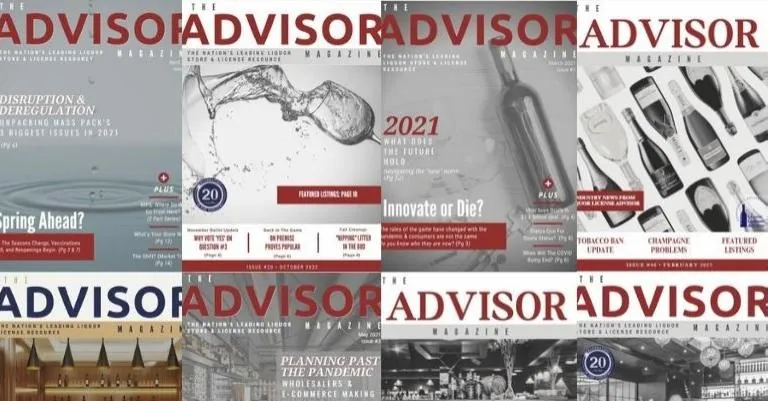
50 Editions of Clarity: The Evolution of The Advisor and the Modern Liquor License Market
The Advisor was created to share the knowledge, experience, and market insight our team has developed through years of working in liquor licensing. Through advising operators, investors, and business owners, we’ve seen firsthand how complex and consequential licensing decisions can be. Liquor licensing is often one of the most critical components of acquiring or transferring an on-premise or off-premise liquor license, yet many operators only begin to understand its complexity when challenges arise. By sharing practical insights and real-world observations from our work in the field, The Advisor was designed to bring greater clarity and perspective to a process that is frequently misunderstood.
From the beginning, one idea shaped the publication: liquor licenses are not administrative formalities. They are strategic assets. Their value is influenced by scarcity, regulation, timing, documentation, and the nuances of local governance. Understanding these factors can often mean the difference between a smooth transaction and an avoidable complication.
Education has remained a central focus of The Advisor from the very beginning. The publication has explored the mechanics of license transfers, addressed common misconceptions around valuation, and examined how regulatory decisions and market conditions influence availability and pricing.
By combining practical licensing knowledge with observations drawn from real transactions and industry trends, The Advisor has aimed to help operators and investors approach licensing decisions with greater clarity and perspective.
Over time, the conversations within The Advisor naturally expanded to include practical insights drawn from our experience working on licensing transactions. In addition to explaining the process, the publication began sharing observations on how preparation, documentation, and coordination can influence the success of a transaction. These discussions focused on helping both buyers and sellers better position themselves before entering the licensing process.
Throughout its editions, The Advisor has examined broader trends affecting both on-premise and off-premise license holders. The publication has discussed shifts from everything to wine sales, evolving drink preferences, generational trends shaping consumer behavior, ballot questions affecting the industry, and regulatory developments such as nip bans and tobacco restrictions impacting off-premise retailers.
During the COVID-19 pandemic, we used the newsletter to provide updates and observations as operators navigated an unprecedented period of disruption and adaptation, along with many other developments affecting the industry. The goal has always been to keep readers informed about the issues, trends, and developments shaping the industry.
Through The Advisor, we have continued to emphasize the value of approaching licensing with preparation and discipline rather than urgency or assumption.
These editions documented a market that had moved beyond foundational understanding and into disciplined execution. Licensing had firmly transitioned into an asset class requiring stewardship. It was no longer enough to know the rules. One had to understand their interaction with timing, capital structure, legislative trajectory, and municipal culture.
What began as foundational education evolved into market interpretation and ultimately into advanced strategic guidance. The publication matured alongside the industry it serves.
Reaching the 50th edition is not merely a numerical milestone. It represents sustained commitment to clarity in a market that demands it. It reflects the operators who sought guidance before making decisions. It reflects the attorneys who coordinated complex transfers. It reflects the investors who approached licensing as a disciplined asset rather than a speculative gamble.
Fifty editions later, the mission remains the same: bring clarity, perspective, and experience to one of the industry’s most important assets.
